

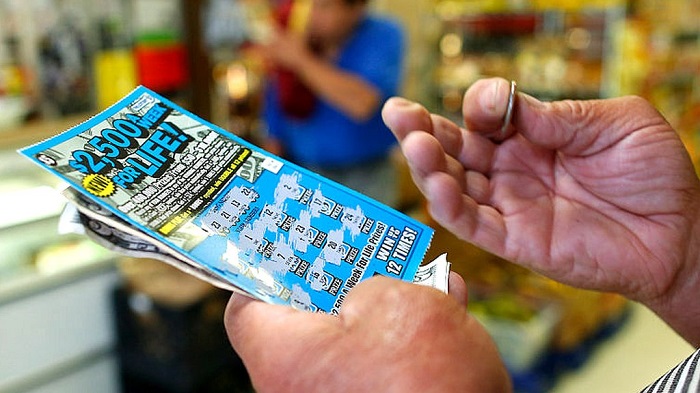
Walking up to a retail counter and pointing at an eye-catching scratch-off ticket is a familiar ritual for millions of Americans. You hand over five, ten, or twenty dollars, take a coin to the latex coating, and imagine seeing five or six zeroes materialize beneath the silver dust. What most casual players never realize is that the headline jackpot printed in oversized, glossy font at the top of that card might already be gone.
State lotteries regularly keep instant games in circulation long after players have claimed every single top-tier prize. Buying one of those tickets means spending full price for a game where the maximum possible return has been fundamentally gutted. Checking whether the jackpot is still in play is not complicated, yet it remains the single most overlooked step in playing instant lottery games.
With a few taps on your smartphone before stepping up to the register, you can immediately filter out dead inventory and focus your money strictly on games that still hold their advertised top payouts.
Why Stores Still Sell Scratch-Offs After Jackpots Are Claimed
It sounds counterintuitive, and to many players downright unfair, that a lottery game continues to sell after someone walks away with the grand prize. The reasoning comes down to prize structures and regulatory rules.
A scratch-off run is not a single drawing; it is a massive production run of millions of individual tickets printed and distributed in batches over months. Within that print run, the grand prize represents only a tiny fraction of the total cash pool. Thousands of mid-tier and lower-tier payouts, ranging from fifty dollars to several thousand dollars, remain distributed across unopened rolls in retail displays statewide.
State lottery commissions are legally required to pay out a specific percentage of ticket sales back to consumers. As long as meaningful secondary cash remains in circulation, states typically allow retailers to keep selling tickets until total ticket inventory falls below a predetermined threshold or an official game-ending declaration is signed. While legal, this structure leaves uninformed buyers paying full price for tickets stripped of their primary appeal.
Where to Find Official Game Data
Every US state that operates an instant scratch game maintains a public database of every active ticket in circulation. Because state lotteries are government-run agencies, this transparency is mandated by law.
To find this information, visit the official website or mobile app of your state lottery commission. Avoid third-party aggregators or speculative forums, as their numbers often lag behind the official clearinghouses by several days.
Once on the official state site, navigate to the section labeled Scratchers, Instant Games, or Scratch-Offs. Look for a sub-tab titled Prizes Remaining, Game Status, or End of Game Notices. Most state lottery websites organize this section into a searchable roster where every active game is listed by price point, launch date, and game number.
Finding the Specific Game Number
Never rely on the promotional name of a ticket alone. State lotteries routinely launch updated editions of perennial favorites like Crossword, Bingo, or Gold Rush under nearly identical titles year after year.
To ensure you are researching the exact ticket sitting in the display case, locate the game number. On an unscratched ticket, this is a three-to-four-digit identifier usually printed in small type on the front corner or alongside the barcode on the back. Online prize tables always list games by both name and game number, allowing you to match your intended purchase with precision.
How to Read and Interpret Prize Remaining Tables
Once you open the prize remaining page for a specific game, you will see a detailed ledger breaking down every payout tier. Reading these tables requires looking past the surface numbers to understand what the data actually says about your chances.
Total Prizes vs. Remaining Prizes
The prize table typically features several columns: prize value, total prizes created during printing, prizes claimed, and prizes remaining.
Your first look must always focus on the highest prize tier. If a game originally had five $1,000,000 payouts and the table shows zero remaining, walk away. There is no mathematical reason to buy a high-dollar ticket when the top prize is gone, as the game’s overall expected value drops dramatically the moment those top payouts disappear.
If top prizes remain, look at the ratio between claimed and unclaimed jackpots alongside the release date of the game. A ticket that has been on the market for a year with four out of five top prizes claimed is winding down. Conversely, a ticket that has been active for six months where none of the top prizes have surfaced suggests those winning cards are still sitting on store shelves or waiting in warehouse rolls.
Checking Mid-Tier Depth
Do not stop at the grand prize row. A balanced ticket should still feature a healthy percentage of secondary and tertiary rewards.
If a ten-dollar game still has one grand prize left but ninety-five percent of its $1,000 and $500 prizes have already been cashed, the game is heavily picked through. In that scenario, hitting any substantial return becomes significantly harder, leaving you with little chance beyond minimal break-even payouts. Look for games where the remaining percentage across the top three payout tiers remains relatively consistent.
Using Mobile Apps for Fast Retail Decisions
Standing in a convenience store aisle squinting at a desktop-formatted website on your phone is awkward and slow. Fortunately, nearly every major state lottery now offers a dedicated mobile app designed to speed up the process.
Most state lottery apps feature a built-in barcode scanner. While this tool is primarily marketed for checking whether a scratched ticket is a winner, many apps allow you to scan an unscratched pack or search the digital catalog directly while shopping.
Before getting in line, open the app, tap into the scratch game directory, and sort the list by prizes remaining or filter strictly by your preferred price point. Within seconds, you can identify which three or four active cards currently have the most favorable jackpot availability. When you reach the counter, ask for those specific games by display number rather than picking randomly based on attractive graphic design.
Understanding the Reporting Delay
While state lottery databases provide the most accurate public records available, you must account for an unavoidable operational delay: the claim processing gap.
State lottery prize tables are typically updated every twenty-four hours based on validated claims. However, a ticket is only marked as claimed once a player physically presents it at a lottery validation center or submits it via certified mail.
If someone bought a winning top-prize ticket this morning, they might wait weeks or even months to consult an attorney, establish a financial plan, or file their claim. During that waiting period, the public database will continue to display that grand prize as remaining.
For this reason, give preference to games that have multiple top prizes still unaccounted for rather than pinning your hopes on the solitary remaining jackpot of an old, lingering run. When multiple prizes remain, a single unvalidated claim in someone’s desk drawer will not completely erase your odds of finding a top payout.
Practical Counter Habits to Protect Your Money
Building a reliable routine at the lottery counter keeps you from wasting money on dead games. Adopting a few simple operational habits will instantly separate your play style from casual gamblers.
First, never take recommendations from store clerks. Cashiers have no visibility into statewide prize claims; they only know which cards are popular with other local buyers. Popularity is often a hazard, as high-volume sales speed up the depletion of top prizes while the game stays in the display until the cardboard roll is completely empty.
Second, avoid buying tickets from games categorized as closing. When a state lottery initiates the formal close of a game, it sets an end-of-sale date, followed by a final redemption deadline. These sunset games are almost always thoroughly depleted of major winnings, functioning primarily as clearance inventory to clear out retail dispensers.
Finally, bookmark your state’s prize table directly onto your phone’s home screen. Checking the list takes less than thirty seconds once you know where to look. Treat that quick search as an essential prerequisite to spending your money, ensuring that every dollar you put down actually buys you an active shot at the prize you are playing for.

Comments are closed.