

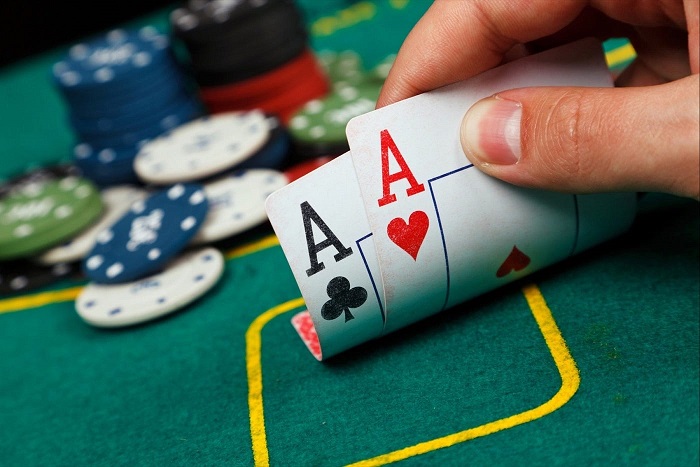
Poker is often described as a game of cards played with people, but at an advanced level, it is a game of continuous decision-making under conditions of incomplete information. Every hand dealt presents a series of puzzles where probability, psychology, risk tolerance, and timing collide. Amateur players frequently judge their success by short-term results: did they win the pot or lose their chips? Elite players, by contrast, focus exclusively on the quality of their choices, knowing that sound logic eventually triumphs over random variance.
Improving your decision-making at the felt requires moving beyond basic intuition. It demands a structured analytical process that remains stable even when variance runs cold, pressure mounts, and emotions flare. By mastering positional awareness, understanding mathematical risk, eliminating emotional bias, and conducting rigorous post-session reviews, you can systematically elevate your cognitive execution and gain a permanent edge over your competition.
Decoupling Process from Outcome
The single greatest hurdle to clear when refining your poker judgment is overcoming outcome bias. The human brain naturally craves simple cause-and-effect explanations. When an action yields a positive reward, the brain registers that action as correct; when it produces a painful loss, the brain views the choice as flawed.
In poker, this natural cognitive shortcut leads to catastrophic habits:
-
The Flawed Call: Calling an all-in bet on the turn with an inside straight draw and catching your card on the river is a statistically terrible decision that happened to yield a profitable result. If you interpret that win as evidence of good play, you will repeat the mistake until your bankroll disappears.
-
The Proper Fold: Correctly folding a marginal two pair on a dangerous wet board when an opponent shows extreme strength is fundamentally sound, even if that opponent was running an uncharacteristic bluff.
-
Accepting Variance: You can make mathematically pristine choices on every single betting round and still lose five buy-ins in a single evening due to unfavorable card distribution.
Developing elite decision-making begins with accepting that poker is a game of probabilities, not certainties. Measure your success by how thoroughly you analyzed the available information before pushing your chips across the line, never by the size of the pot pushed in your direction.
Building a Structured Pre-Action Mental Checklist
Rushed decisions are almost always weak decisions. When recreational players face an unexpected raise or a large river bet, they often freeze, panic, and react based on immediate emotional discomfort. Seasoned professionals, on the other hand, rely on an automated mental checklist that breaks complex dilemmas down into manageable variables.
Before announcing any action, pause for several seconds to evaluate these critical factors:
Positional Advantage and Table Dynamics
Position is the bedrock of power in Texas Hold’em and Omaha. Acting last on every post-flop street grants you an informational advantage that cannot be compensated for by raw card strength alone.
-
Ask yourself who entered the pot first, what their table image suggests, and how many players remain behind you to act.
-
A marginal holding in late position on the button can be played with high profitability, whereas that identical hand from early position represents an immediate fold.
Relative Range Construction
Beginners try to put their opponents on one specific hand: “I think he has ace-king.” Advanced decision-makers think in terms of ranges, which represent the entire spectrum of possible holdings an opponent could reasonably possess based on their past actions.
-
Consider how their preflop position restricts or widens their starting range.
-
Track how their bet sizing on the flop and turn filters out weak holdings, leaving either value hands or air bluffs by the river.
-
Compare how your own perceived range interacts with the board texture. Opponents play against the story your betting pattern tells, not just your two private cards.
Pot Odds, Implied Odds, and Expected Value
Every bet you place or call you make must be grounded in mathematical reality. Calculate the pot odds by comparing the current size of the pot to the cost of the prospective call.
-
If a pot contains one hundred dollars and you must call twenty dollars, you are getting five-to-one on your money, requiring roughly seventeen percent equity to break even.
-
Factor in implied odds: if you complete your draw, how much additional money can you reasonably extract from your opponent on future streets?
-
Weigh reverse implied odds: if you hit your card, could it complete a superior hand for your opponent, costing you your entire stack?
Controlling Emotional Volatility and Eliminating Tilt
You cannot make rational, probabilistic calculations if your brain is flooded with adrenaline, frustration, or desperation. Emotional instability, collectively known as tilt, is the premier destroyer of poker talent. Tilt is not limited to overt outbursts, table-slamming, or verbal berating of opponents; subtle tilt is far more dangerous.
Subtle tilt manifests as:
-
Calling speculative raises out of boredom because you have not seen a playable hand in two hours.
-
Widening your three-bet range purely out of personal irritation toward an aggressive player on your immediate left.
-
Refusing to lay down a strong starting hand after the board texture renders it completely vulnerable.
-
Playing higher stakes than your bankroll permits in an urgent, undisciplined attempt to get even before the session concludes.
To build psychological resilience, establish strict physiological check-ins. When you feel your pulse quicken, your jaw clench, or a surge of anger following a bad beat, institute a mandatory breathing reset. Inhale deeply through your nose for four seconds, hold for four seconds, and exhale slowly for six seconds. If the frustration persists, physically stand up, step away from the table, walk outside into the fresh air, and miss an entire orbit of blinds until your logic takes the wheel once more.
Exploitative Versus Balanced Decision-Making
A major strategic debate in modern poker involves balancing Game Theory Optimal principles with exploitative adjustments. Understanding when to apply each framework is a hallmark of superior decision-making.
The Baseline of Balance
Game Theory Optimal play seeks to construct unexploitable betting strategies, balancing value bets with precise ratios of bluffs across various board textures. Against world-class professionals who study computational solvers, playing a balanced baseline protects you from being systematically dismantled.
The Profit of Exploitation
The vast majority of real-world opponents, especially in low-to-medium-stakes cash games and tournaments, are far from balanced. They possess massive, recurring structural leaks:
-
Calling Stations: Some opponents simply cannot find the fold button if they hold any piece of the board. Against these players, eliminate elaborate triple-barrel bluffs entirely. Widen your value-betting range, increase your bet sizing with strong holdings, and let them pay to see showdowns.
-
Over-Folders: Passive players who bet only when they possess premium hands will fold to any show of aggression on scary turn or river cards. Execute targeted bluffs against their weakness, and comfortably fold your decent hands whenever they display rare, unexpected aggression.
Top-tier decision-makers adopt a solver-informed framework as their home base, but they immediately deviate toward exploitative lines the moment an opponent demonstrates predictable tactical flaws.
The Role of Physical Tells and Table Awareness
While online poker relies heavily on timing tells and statistical databases, live poker introduces rich physical information. However, amateur players often place far too much emphasis on Hollywood-style physical reads, ignoring the mathematics of the game in search of a twitching eye or trembling hand.
Physical observation should corroborate your mathematical thesis, never replace it:
-
Watch Opponents When You Are Not in the Hand: The best time to study tendencies is when your own chips are completely safe. Watch how players behave when they are bluffing versus when they are nutted. Do they sit up straight, lean back, reach for water, or stare down the table?
-
Monitor Chip Handling and Posture: Genuine comfort often looks like relaxation; manufactured confidence often presents as rigid, unnatural stillness. Look for changes in baseline behavior rather than isolated gestures.
-
Track Bet-Sizing Mechanics: Physical tells often show up in how players handle their chips. A forceful, dramatic splash into the pot frequently signals weakness trying to look strong, while a quiet, casual slide of a high-denomination stack often indicates absolute confidence.
Establishing a Rigorous Post-Session Review Habit
The real work of sharpening your cognitive performance happens away from the cardroom. Players who merely play hands without analyzing them reinforce their own bad habits through repetition.
Transform your improvement process with systematic post-game analysis:
-
Record Ambiguous Hands in Real Time: Use your smartphone notes app to record hand histories immediately after they occur. Document the blinds, effective stack sizes, table positions, exact action on every street, and your internal rationale during the hand.
-
Use Modern Analytical Software: Run difficult spots through equity calculators and modern solver platforms away from the table. Compare the mathematically optimal line against the line you took in the heat of the moment to discover hidden leaks.
-
Participate in Constructive Study Circles: Discuss tricky scenarios with peers who are fundamentally better players than you. Avoid hand history sessions that turn into emotional complaint forums about bad beats; seek out partners who challenge your assumptions and force you to defend your logic.
Approaching poker as a lifetime study of human behavior, probability, and cognitive discipline turns every session into a valuable masterclass. By prioritizing sound analysis over emotional impulse, you insulate your game from devastating swings and construct an unshakeable foundation for long-term mastery.
Frequently Asked Questions
How does stack depth fundamentally alter preflop and postflop decisions?
Stack depth, measured in big blinds, dictates your risk tolerance and the value of specific card combinations. With short stacks of twenty blinds or fewer, drawing hands like small pocket pairs and suited connectors lose value because there are insufficient chips behind to justify speculating, making high cards and top-pair strength supreme. With deep stacks of one hundred and fifty blinds or more, implied odds surge, dramatically increasing the profitability of speculative hands that can flop hidden monsters like sets, straights, and flushes.
What is the difference between active thinking and playing on autopilot?
Playing on autopilot occurs when a player makes moves based purely on habit, convenience, or shallow surface patterns, such as routinely continuation-betting every single flop simply because they were the preflop aggressor. Active thinking requires pausing on every street to assess board texture, opponent tendencies, bet sizing, and future street scenarios before committing a single chip.
How can a player determine if an opponent is bluffing or value betting on the river?
Evaluating a river bet requires retracing the complete narrative of the hand. Ask yourself if the opponent’s story makes logical sense: does their preflop action, flop check-call, and turn raise line up with the hand they are now representing? If their line is inconsistent, or if the board texture missed numerous draws that their previous actions suggested they were chasing, the probability of a bluff rises significantly.
Why do solver models sometimes recommend seemingly counter-intuitive checking lines?
Solvers evaluate strategies across an entire range rather than looking at an isolated holding. A solver may advise checking a powerful hand, such as top two pair, to protect your overall checking range. If you only check when you possess weak holdings, observant opponents can bet aggressively every time you tap the table, exploiting your passivity.
How does physical fitness and sleep quality impact poker decision-making?
Poker demands intense mental focus and working memory over long, unbroken sessions. Chronic sleep deprivation and poor metabolic health reduce prefrontal cortex activity, impairing risk appraisal, slowing mathematical processing, and increasing vulnerability to emotional tilt. Maintaining solid sleep hygiene and cardiovascular fitness preserves cognitive sharpness through the late, high-leverage hours of a tournament or cash session.
What should you do when you realize your entire table has identified your playing style?
When you realize opponents are actively countering your habits, you have two choices: adjust your baseline or find a new table. If you have been playing extremely tight and players are constantly stealing your blinds, widen your three-betting range to push back. If the table dynamic remains unfavorable and you no longer hold a strategic edge, practicing game selection and moving to a softer game is the wisest choice.
How long does it realistically take to see measurable improvements in poker decision-making?
Developing consistent, high-level decision-making is a gradual process that typically takes several months of dedicated study paired with disciplined volume. Because short-term results are heavily obscured by statistical variance, it often takes tens of thousands of played hands before the financial bottom line accurately reflects your improved cognitive execution.

Comments are closed.